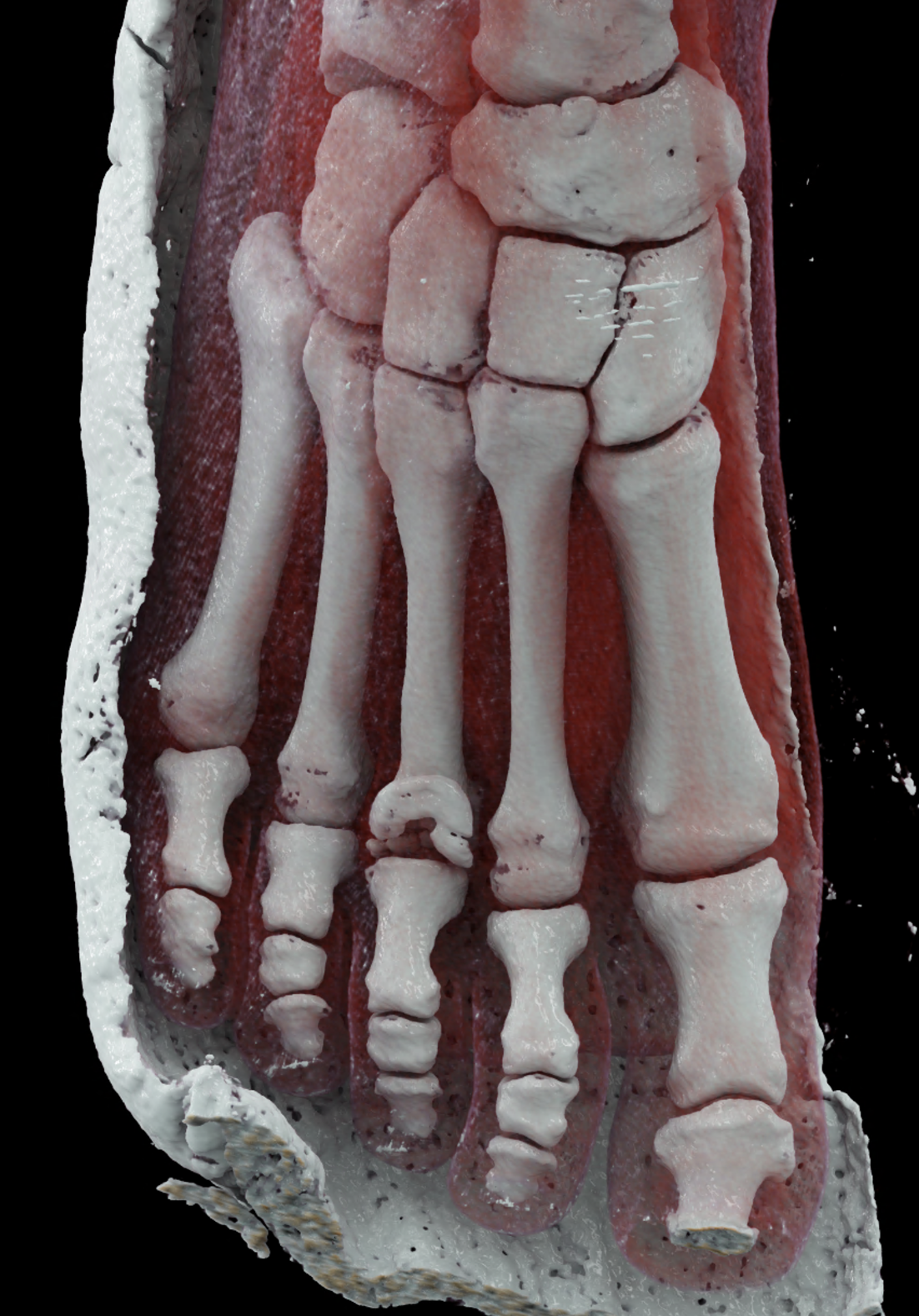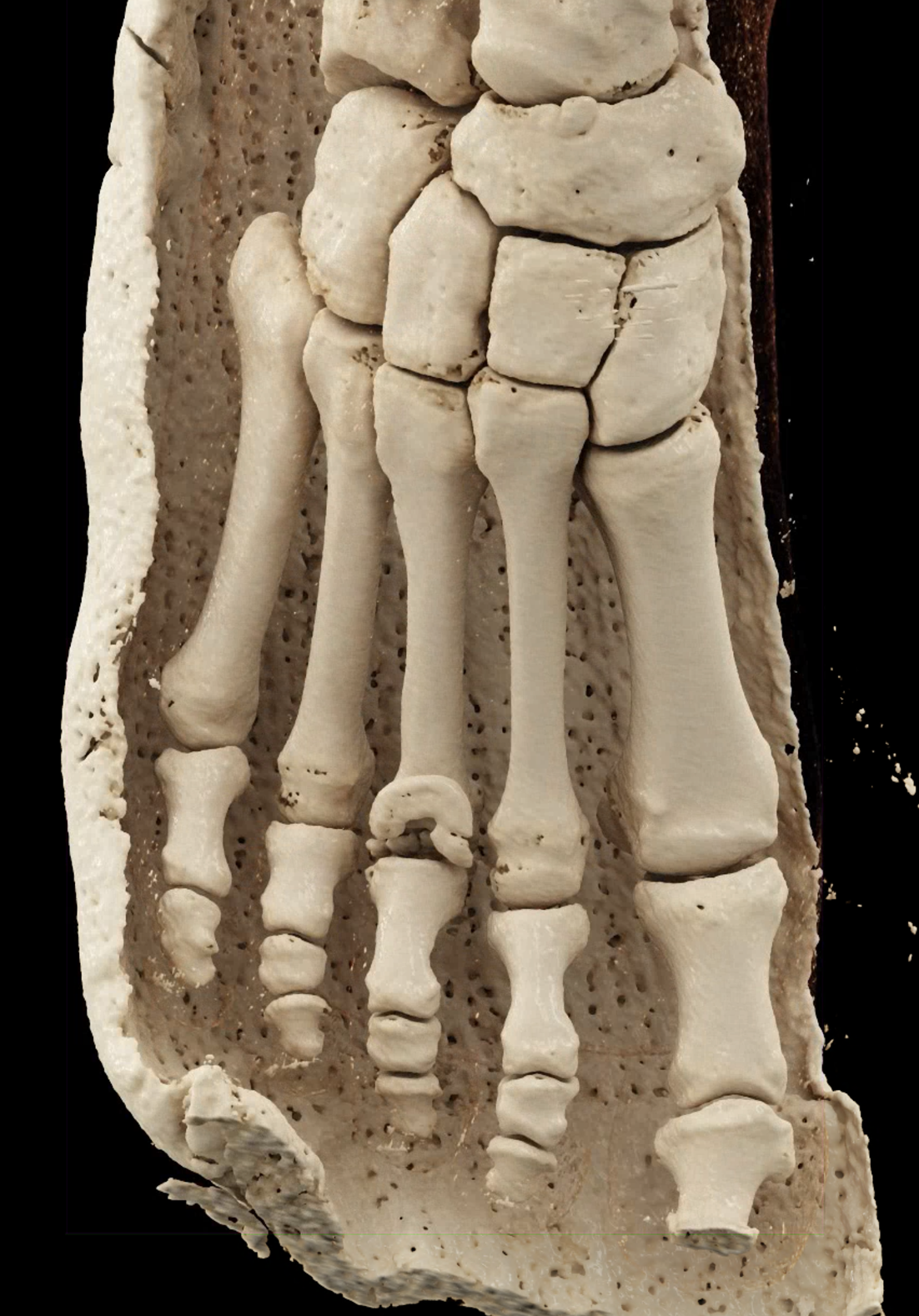
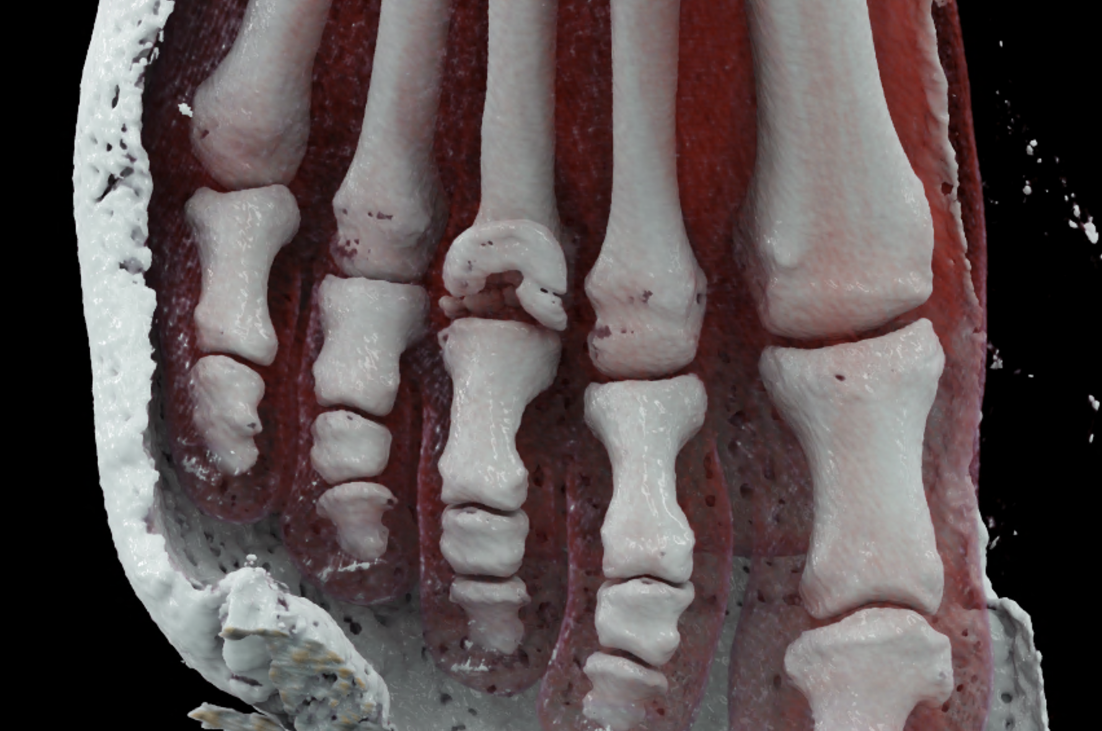
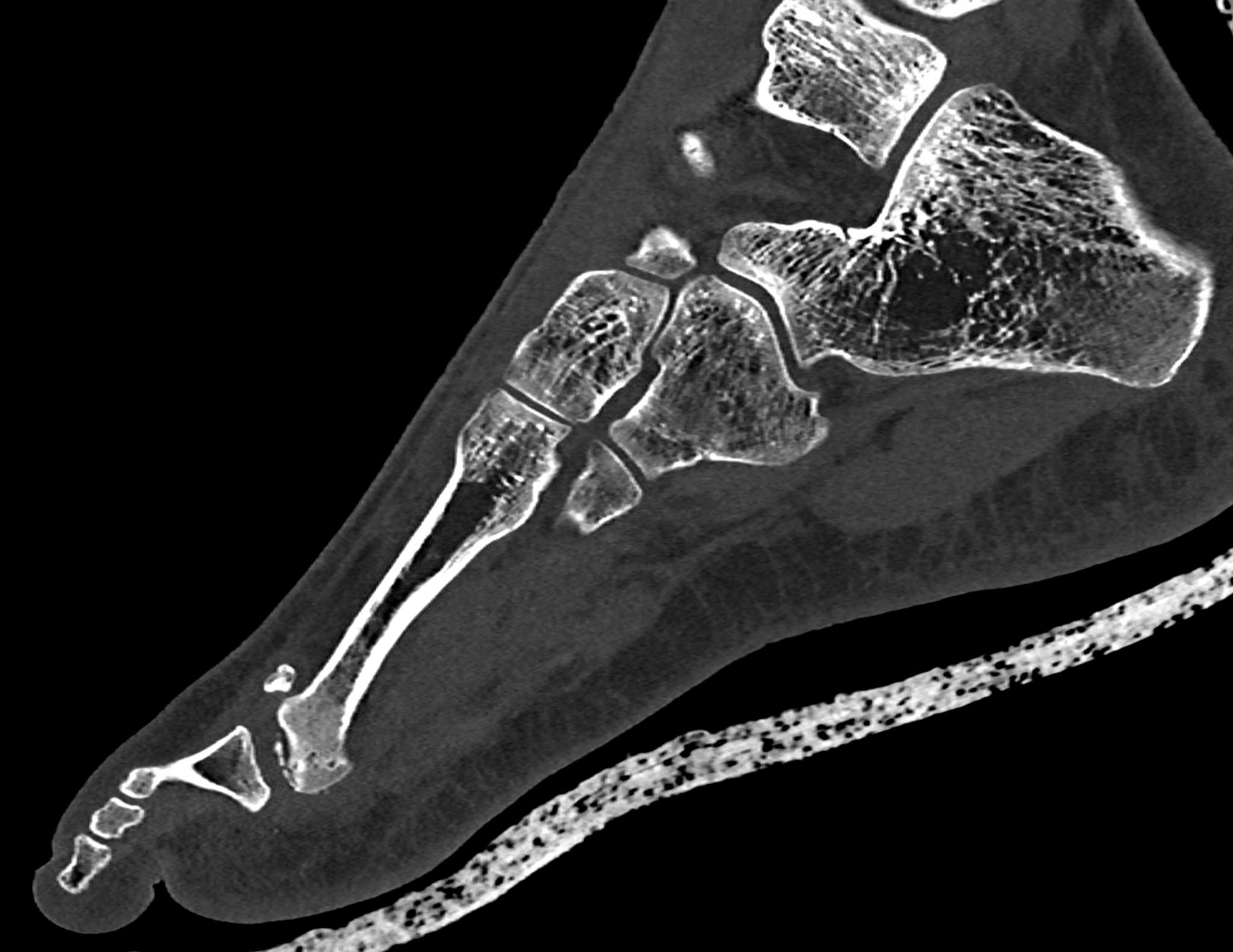
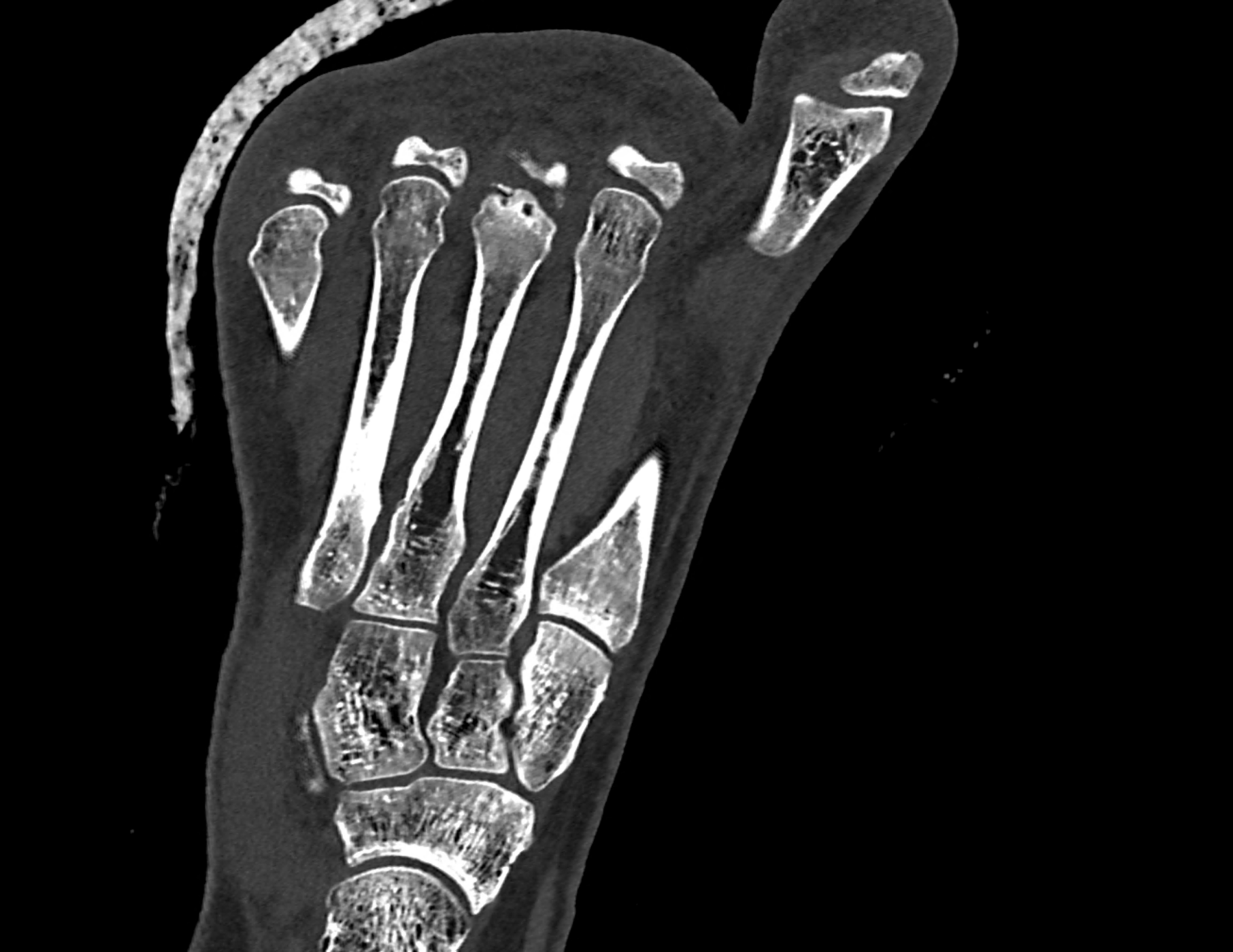
Freiberg-Koehler disease is aseptic necrosis of the head of the second or third metatarsal bone. It is more common in girls during puberty and skeletal maturation, when necrosis of the head occurs, followed by its fragmentation and subsequent deformity of the front part of the foot and the formation of pressure sores. In the acute stage, swelling and pain may occur in the area of the transverse flat arch of the foot. However, it very often progresses without any symptoms and only begins to manifest itself at a later age in connection with transverse flatfoot, with pain and pressure sores under the metatarsal heads in the front part of the foot. In the acute stage in growing children, pain in the front of the foot usually occurs after and following exertion. CT scans show fragmentation and dorsal subluxation of the distal fragments in aseptic necrosis of the metatarsal head more clearly than plain X-rays. Necrosis manifests itself in a changed structure and, in later stages, a significant change in shape; often, significant destruction of the metatarsal head can be seen.
When using ultra-high resolution CT with the smallest possible detector element, even the smallest details of bone changes can be visualized using photon-counting CT. By reconstructing images with a width of 0.2 mm and an overlap of 0.1 mm, there is a significant improvement in resolution in the planes of the reconstructed images in the metatarsal axis in the long axis of the foot, but also in the plane perpendicular to it, which better displays the metatarsophalangeal joint in the laterolateral direction.
Naeotom Alpha.Pro, University Hospital Pilsen, Czechia
two perpendicular multiplayer reconstruction of foot targeted to the third metatarsal head
volume rendered reconstructions